Folk Omens, Superstitions and Rituals When Buying an Apartment.
Folk Signs, Superstitions and Housewarming Rituals When Buying an Apartment
Buying a home is an emotional milestone filled with hopes for comfort, stability and a good future. Over the centuries, different cultures have developed signs, beliefs and rituals connected with moving into a new home. Some are widely known, while others have become rare or unusual traditions.
1. How to Attract Good Luck When Buying an Apartment
For people who follow traditional beliefs, the search for the “right” home can begin long before the purchase agreement is signed. The first visit is often treated as an important symbolic moment that sets the tone for the future move.
Traditional beliefs about how to enter a potential new apartment for the first time include:
- The “lucky foot” sign: step across the threshold with the right foot first. Traditionally, this is believed to help the home “accept” its future owner and support a smooth transaction.
- The coin-at-the-threshold ritual: on the first visit, a small silver- or gold-colored coin is quietly tossed into a corner of the entrance hall. A clear ringing sound is associated with prosperity, while a dull sound is interpreted as a warning of unexpected expenses.
- The candle test: when viewing a resale property, some people carry a lit wax candle through the rooms. A steady flame is traditionally associated with calm energy, while crackling or soot is interpreted as a sign of tension in the home.
- Leaving something behind for luck: if you really like the apartment, tradition suggests “accidentally” leaving a small personal item, such as a handkerchief or coin, as a symbolic promise to return as the owner.
These symbolic actions can help buyers slow down, pay attention to the atmosphere and approach the visit with positive expectations. Many traditions become even more prominent after the deal is completed and the move begins.
2. Kazakh Traditions and Customs When Moving into a New Home
Common customs when moving into a new apartment include:
● Shashu: sweets, candies and sometimes coins are scattered for the new residents and guests when they first enter the home. Children and guests collect them as symbols of happiness and abundance.
● Qonys toi (Қоныс той): a large housewarming celebration to which elders, relatives and new neighbors are invited. A generous dastarkhan is traditionally laid, often including beshbarmak.
● Bata (blessing): a respected elder or honored guest gives a formal blessing and wishes peace and prosperity to the household, so that the family hearth remains warm and the home is filled with children’s laughter.
● Yerulik: a tradition in which established neighbors invite new residents for lunch or dinner, helping them get to know the community and settle in more quickly.
These customs turn an ordinary move into a shared family and community event. Alongside the celebration, many households also observe practical or symbolic rituals intended to protect the new home.
3. Moving-In Rituals and Saying Goodbye to the Old Home
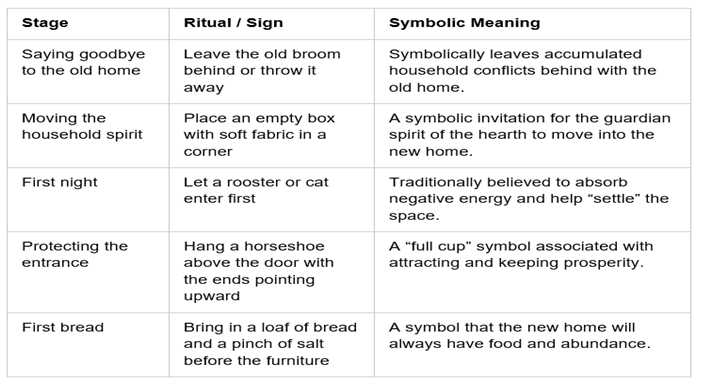
The physical move is often viewed as a symbolic boundary between the past and the future. Traditional customs therefore describe a sequence of actions intended to leave old difficulties behind and settle into the new space well.
Popular and less common signs associated with moving into a new apartment include:
4. Unusual Housewarming Traditions from Around the World
The desire to bring happiness into a new home appears in many cultures. Around the world, people use a wide range of symbolic ways to mark a move and create a sense of harmony in the new space.
Examples of international moving traditions include:
- Feng Shui ritual (China): before moving in, all windows are opened, lights are switched on in every room and water is run for several minutes to symbolically activate the flow of qi energy.
- Sage cleansing (North America): before furniture is arranged, some people burn sage or Palo Santo as a symbolic way to clear the atmosphere of the previous space.
- Saint Joseph tradition (Italy and the United States): some buyers or sellers who hope for a quick property transaction bury a small statue of Saint Joseph upside down in a flowerpot or near the entrance to the home.
Although these practices are very different, they often serve a similar purpose: helping people adapt emotionally to a new place. A modern perspective can also reveal practical or psychological explanations behind some folk traditions.
Why Some Superstitions Feel Effective: Psychology and Practical Logic
Despite their mystical background, many traditional signs and rituals can also be understood through psychological or practical reasoning.
1. Stress Relief and a Sense of Control
Buying a home and moving are major life events that can be stressful. Rituals such as Shashu, letting a cat enter first or hanging a new horseshoe can create a sense of control and continuity. For some people, this makes the new space feel more familiar and emotionally “theirs.”
2. Practical Interpretations of Traditional “Superstitions”
- Letting a cat enter first: cats can react to drafts, damp areas and unfamiliar sounds. If an animal repeatedly avoids one corner, it may prompt the owner to check ventilation, temperature or hidden noise sources.
- The candle ritual: a flickering or sooty flame may be affected by drafts from poorly sealed windows, gaps near skirting boards or airflow from ventilation channels.
- Salt cleansing and wet cleaning: regardless of symbolism, a thorough first clean removes dust, allergens and traces left by previous owners, tenants or builders.
- Yerulik and Qonys toi: these traditions also have a clear social function. Building good relationships with neighbors from the first days can improve communication, mutual support and a sense of security in the building and courtyard.
Understanding the symbolic and practical sides of these traditions makes it possible to respect cultural customs while still taking a calm, legally careful and practical approach to buying property.
Frequently Asked Questions (FAQ)
Good-Luck Signs When Buying an Apartment
Tradition considers light rain or snow on the day of signing to be a positive sign associated with cleansing and abundance. A cooperative seller is also viewed favorably. If the apartment feels warm, calm and welcoming on the first visit, believers may say that the home “accepts” you.
New Year in a New Apartment: Traditions and Signs
A common tradition is to welcome the New Year with a full dastarkhan, a filled salt cellar and no unfinished debts. Garlands and candles are lit throughout the home to symbolize light, warmth and positive energy for the year ahead.
Positive Signs When Selling an Apartment
Some traditions consider it a good sign if the first buyer takes off their shoes at the threshold or spends a long time in the kitchen. Dropping keys near the entrance or complimenting the view is also sometimes interpreted as a sign that the sale will happen soon.
The First Night in a New Apartment
Traditionally, people may say short wishes for good dreams and peace in the home before going to sleep. A small night light may be left on in the hallway, and a coin can be placed under the pillow as a symbol of prosperity.
Is It a Good Idea to Buy an Apartment Before New Year?
According to popular belief, buying a home at the end of the year symbolizes entering a new life cycle without old burdens and beginning the next year with greater stability.
Should You Buy an Apartment on the 13th Floor?
The number 13 is associated with superstition in many cultures, but in some Asian and Eastern traditions it may also be interpreted as a symbol of transformation and the beginning of a new stage.
When you buy an apartment at White Residence by TAU Development, you choose more than square metres: you choose a carefully designed living environment with a clear legal framework, modern comfort and a strong sense of home. In this low-rise residential development near the foothills of Almaty, every detail—from fresh air and mountain surroundings to construction quality—is intended to support a warm, peaceful and comfortable everyday life.
Read next
All publications